Tangier —
the gateway to Africa
A day of real photography
Tangier is not an easy city. It does not let itself be photographed at first try. It does not give itself to the casual visitor.
It is a city you need to understand, observe and, above all, know how to navigate. In a single day —if you know where to be and when— Tangier opens up. And it does so with a visual intensity hard to find anywhere else in the world. It is border, mixture, friction. Europe and Africa looking into each other's eyes across the Strait of Gibraltar, a tiny strip of water barely 15km wide separating two continents.
This photo tour is not a tourist visit with a camera. It is a real photography working day, designed for those who want to go beyond the postcard.
You will join Raul Cacho, a documentary photographer with over 10 years of experience in travel photography and a resident of Tangier, on a journey where every stop has a visual and narrative purpose.
You will learn to read the changing light of the medina, to approach people with respect and ease, to anticipate scenes before they happen, to build images with intention — not by chance.
08:00 — The fish market
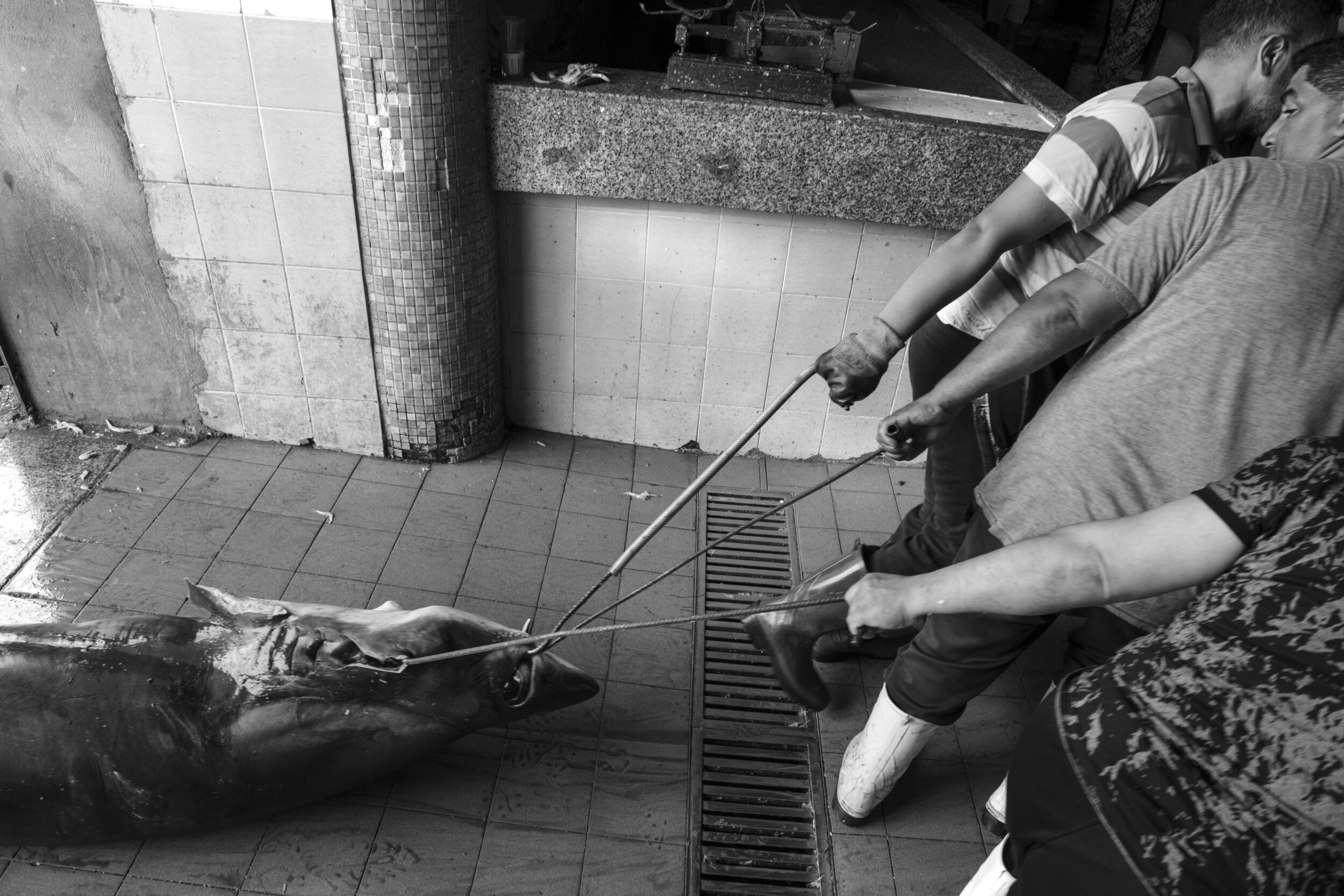
Fish market
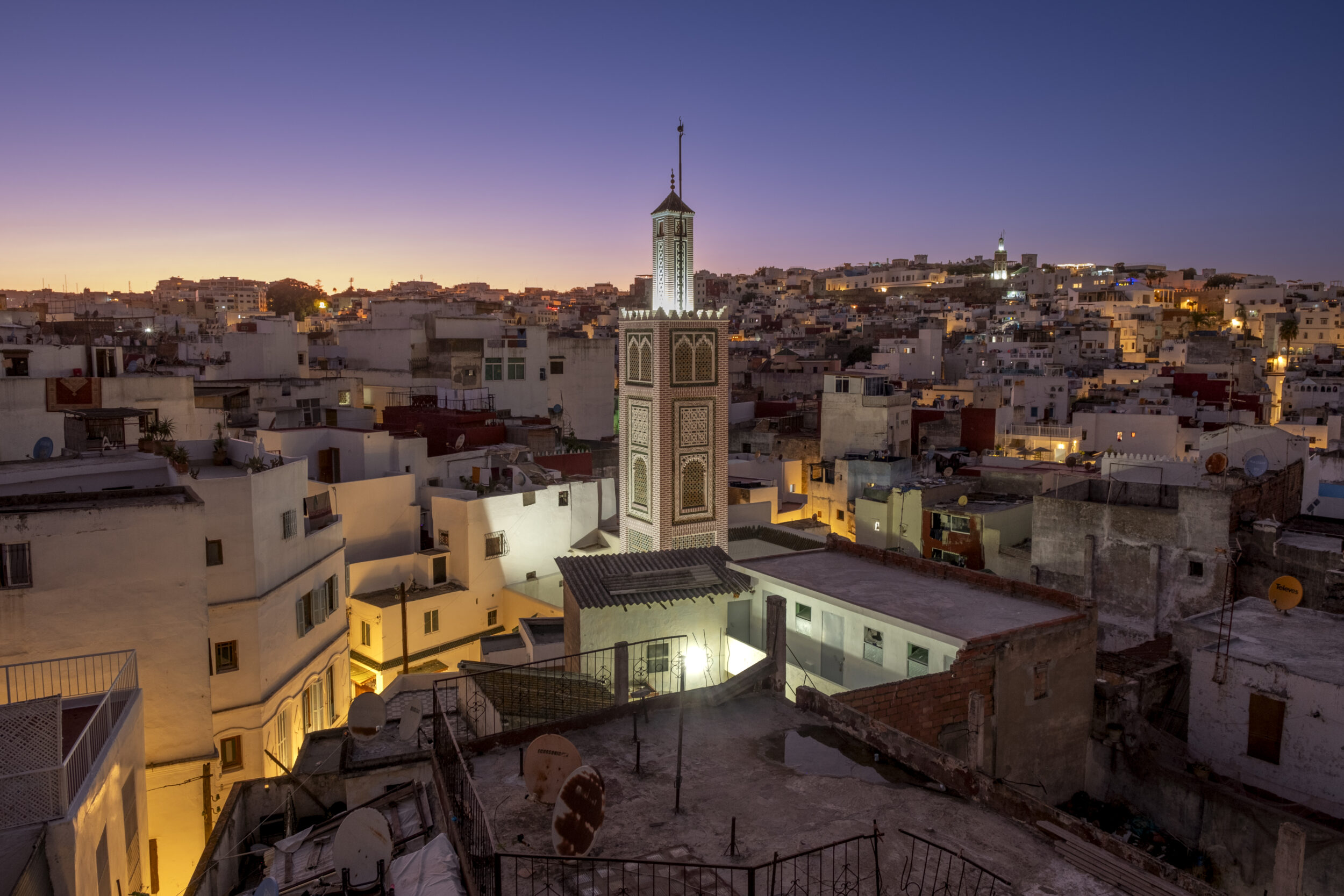
View from the Café Central rooftop
We start early, where the real day begins.
Tangier's Central Fish Market has been in this same location since the 19th century, when the city was already a crossroads. Every morning the same ritual repeats: trucks and carts unloading, crates hitting the ground, vendors arranging their goods with an almost choreographed precision. The light still dim, a constant flow of porters and fishmongers. That is precisely its strength. Here you will work fast, chaotic scenes, action photography in real environments.
09:00 — Jeblias in the Souk
We move to the heart of the medina.
At this hour the Jeblia women appear — women from the Rif region who come down to the market in their traditional dress: straw hats decorated with flowers and coloured tassels, blue and white striped fabrics, wool capes. A costume that identifies them, marks their origin, speaks of centuries of culture in northern Morocco.
An increasingly rare scene. A world that is disappearing.
Here you will work on documentary portrait in natural settings, colour and composition, interaction with real subjects.
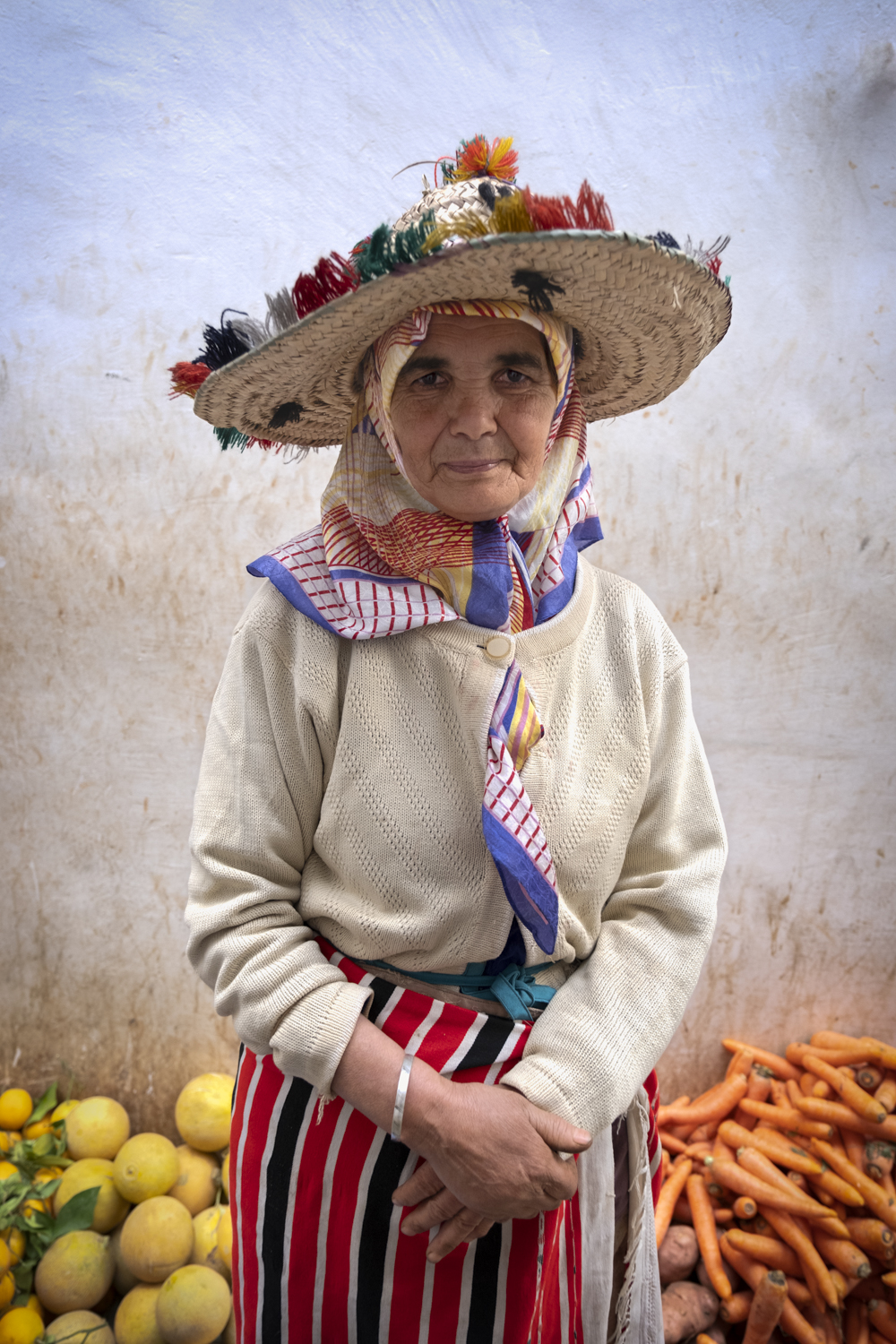
Jeblia in the souk of Tangier
10:00 — Street photography in the medina
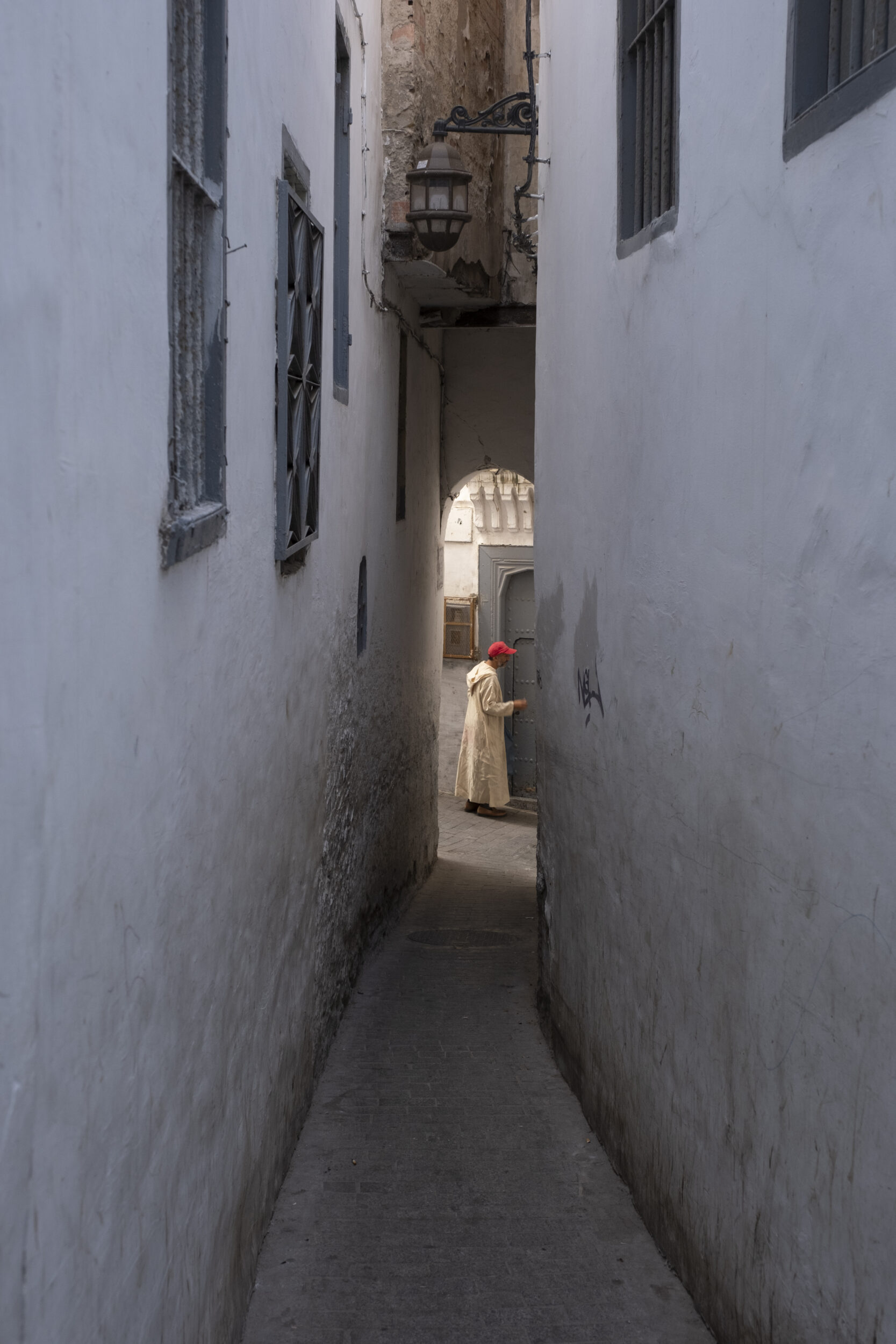
Medina streets
The medina at mid-morning is a visual laboratory.
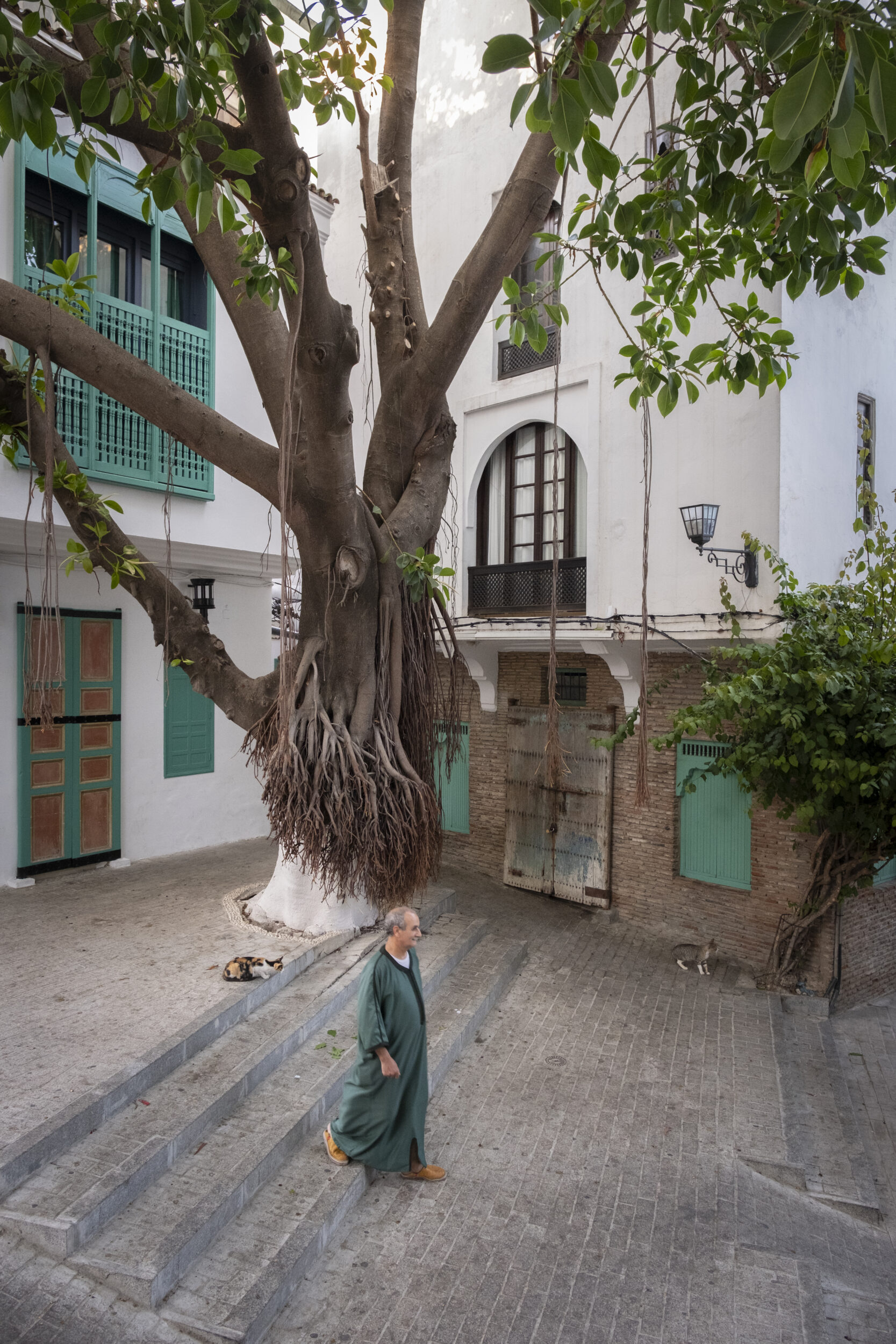
Narrow streets carved in time, some with centuries of history accumulated in their walls. Light filtered between buildings, shifting geometries, every corner a potential scene. Tangier's medina is smaller and more accessible than those of Fez or Marrakech — which makes it perfect for moving with a camera without feeling like an intruder.
The Grand Taxi Mercedes, those 100D models from the seventies and eighties that time has not managed to retire, appear as visual anchors in the midst of the chaos. Rolling icons of another era.
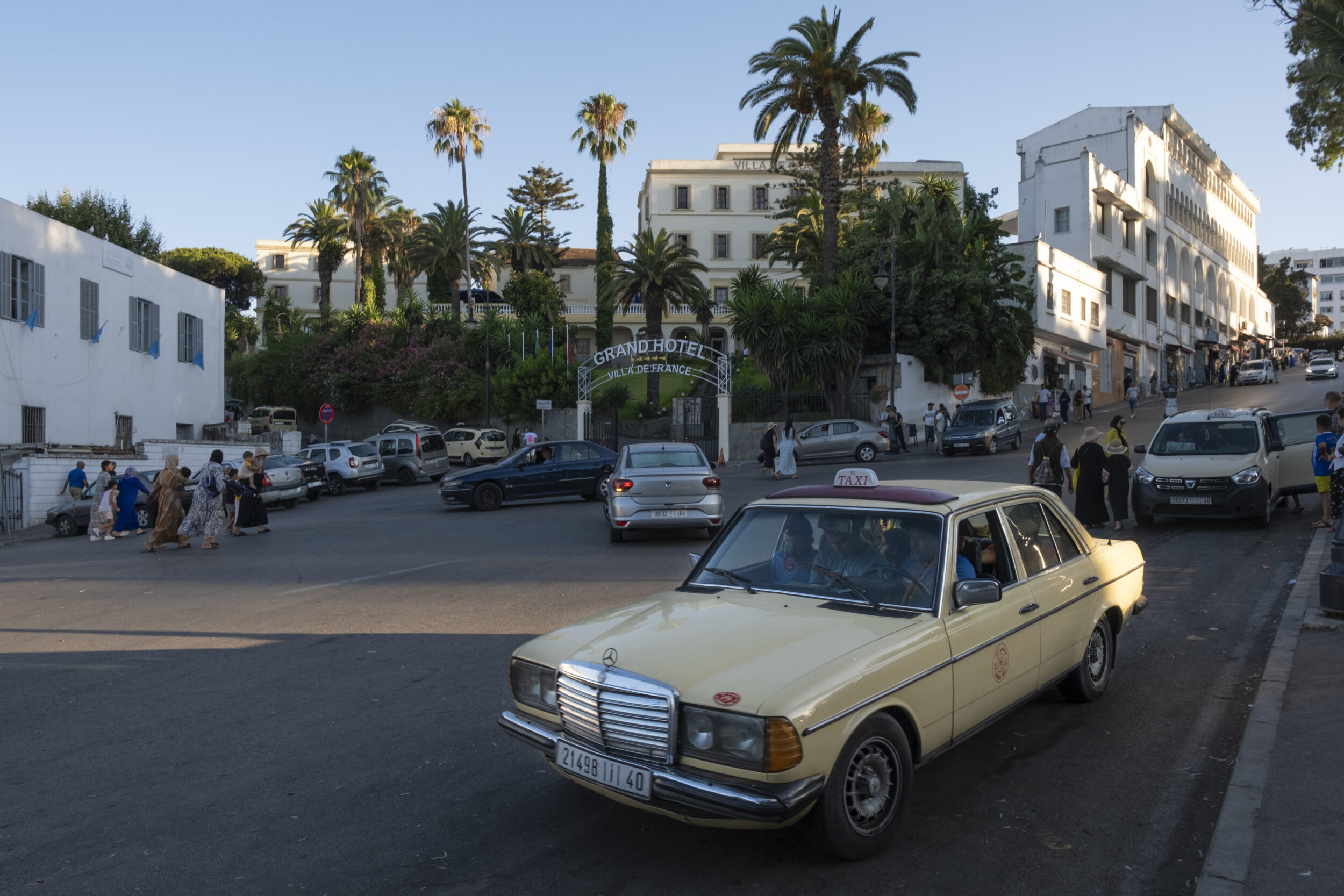
Grand Taxi at Mendoubia Gardens
Here you will work on composition with light and shadow, scene anticipation, narrative in street photography.
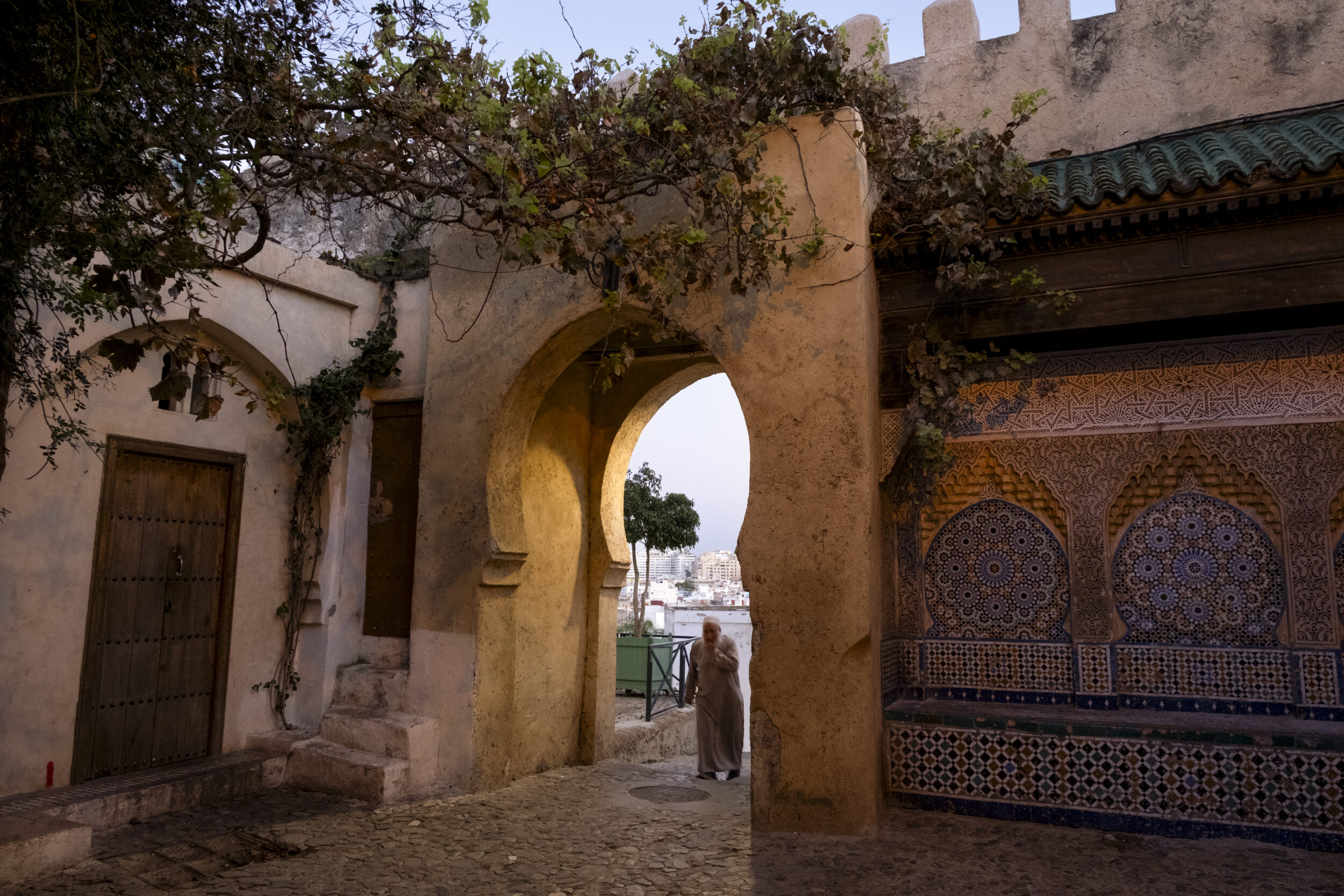
Kasbah gate
11:00 — The Kasbah and the upper city
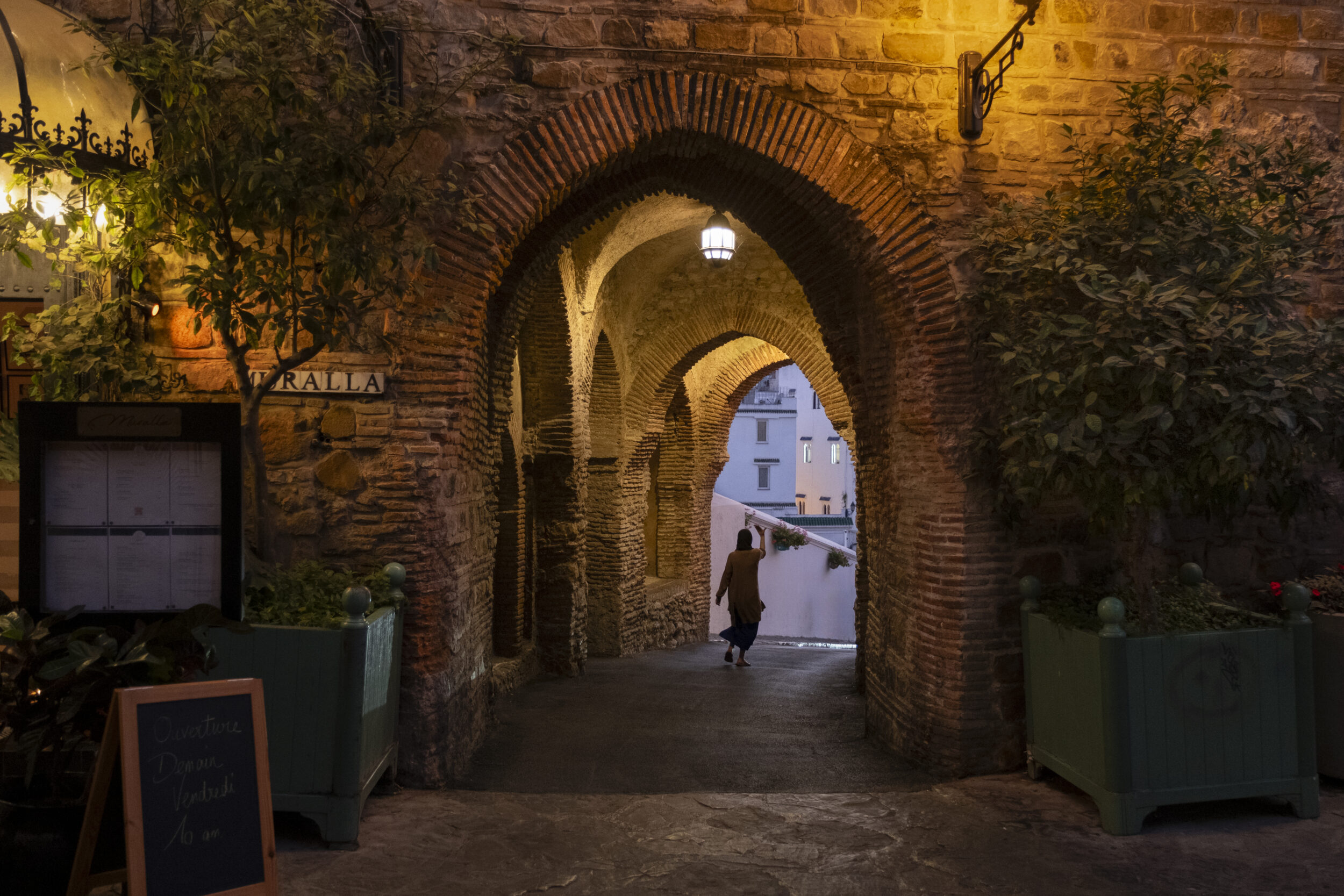
Puerta de la Kasbah
We climb to the highest part of the city.
The Kasbah of Tangier was for centuries the residence of the city's governors — sultans, pashas, European diplomats. Its walls date back to the 17th century, though the history of the place is much older. Here lived characters who shaped the legend of Tangier: from the explorer Ibn Battuta, born in this city in 1304, to the diplomatic corps that turned Tangier into an international zone during the 20th century.
Today the Kasbah offers another face: quieter, more structured, almost contemplative. Monumental gates, inner courtyards with perfect side lighting, craftsmen working in workshops that have been in the same spot for generations. And the snake charmers in the square, if the day is right.
Then, the Bab el Assa Cemetery: whitewashed tombs, cypress trees, the Strait of Gibraltar in the background. One of Tangier's most serene views.
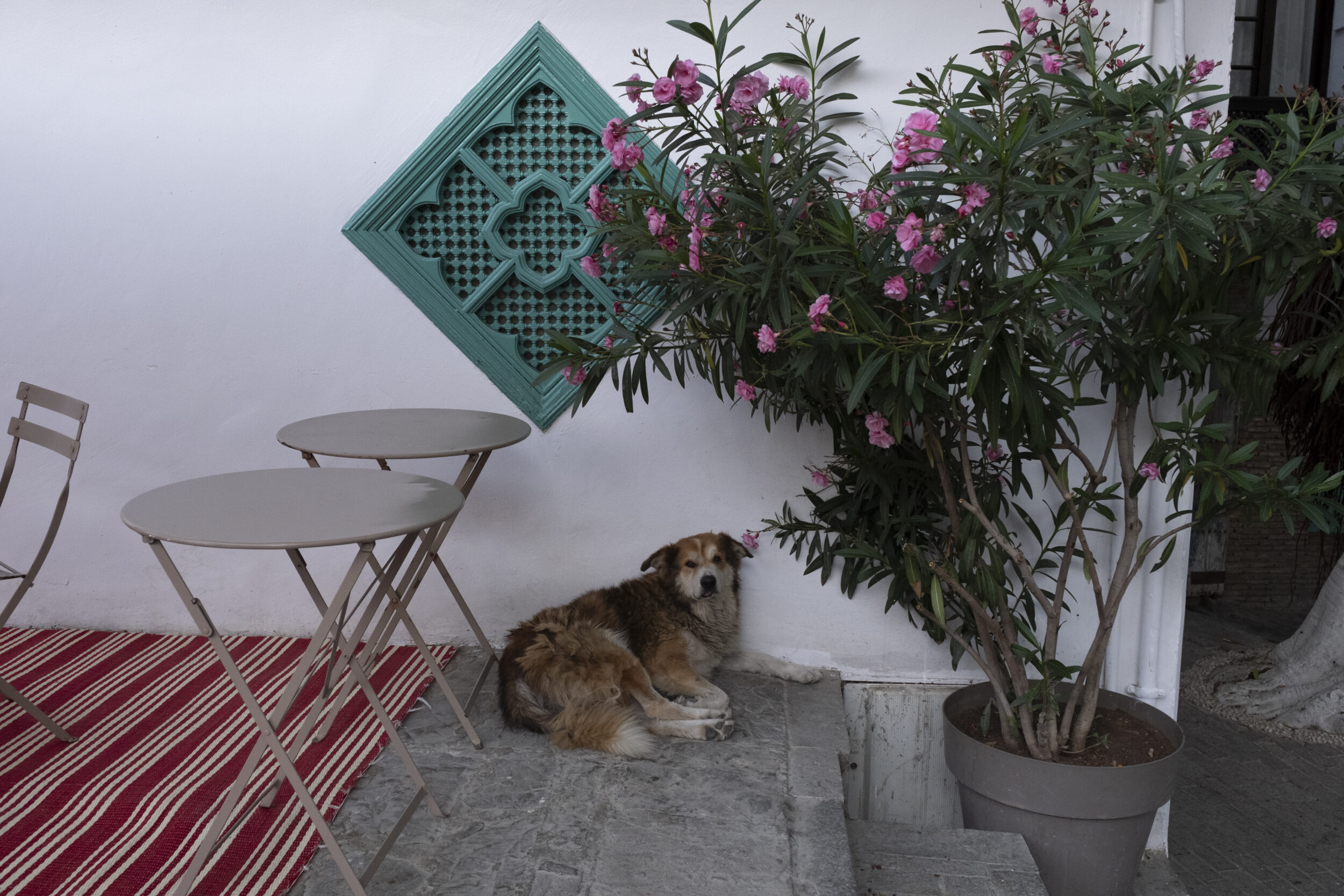
Kasbah
Here you will work on slower photography, use of space and background, clean and minimalist composition.
14:00 — Fondouk Chejra and Teatro Cervantes
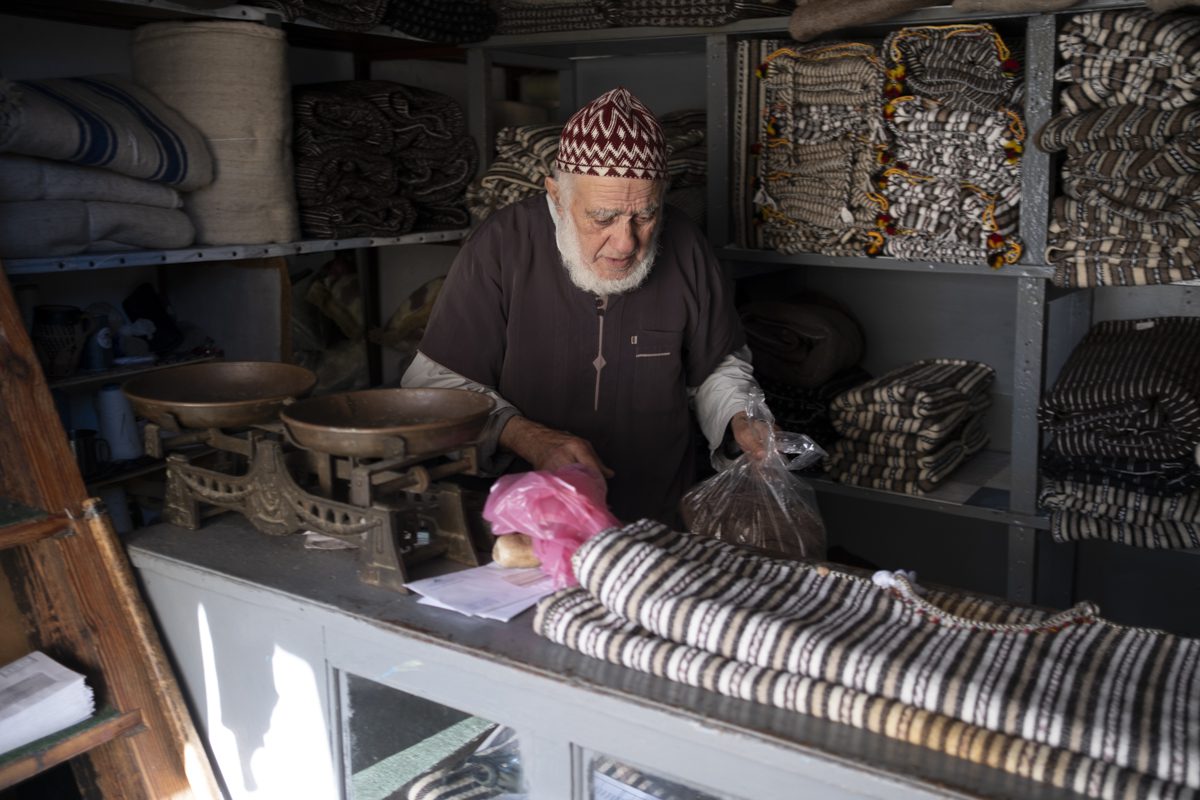
Fondouk Chejra
After a lunch break, we shift register.
Fondouk Chejra is one of the last spaces where time seems to have stopped. A fondouk was originally an inn for merchants and their goods — a medieval Islamic institution that in Tangier survived, converted into a collective workshop. Here weavers work in unique light conditions: suspended dust, texture on every surface, a dense and warm atmosphere that the camera loves.
Then, the Teatro Cervantes. Inaugurated in 1913 by Tangier's Spanish colony, it was for decades the largest theatre in Morocco.
Here you will work on interior photography, texture and atmosphere, more conceptual visual narrative.
15:00 — European Tangier
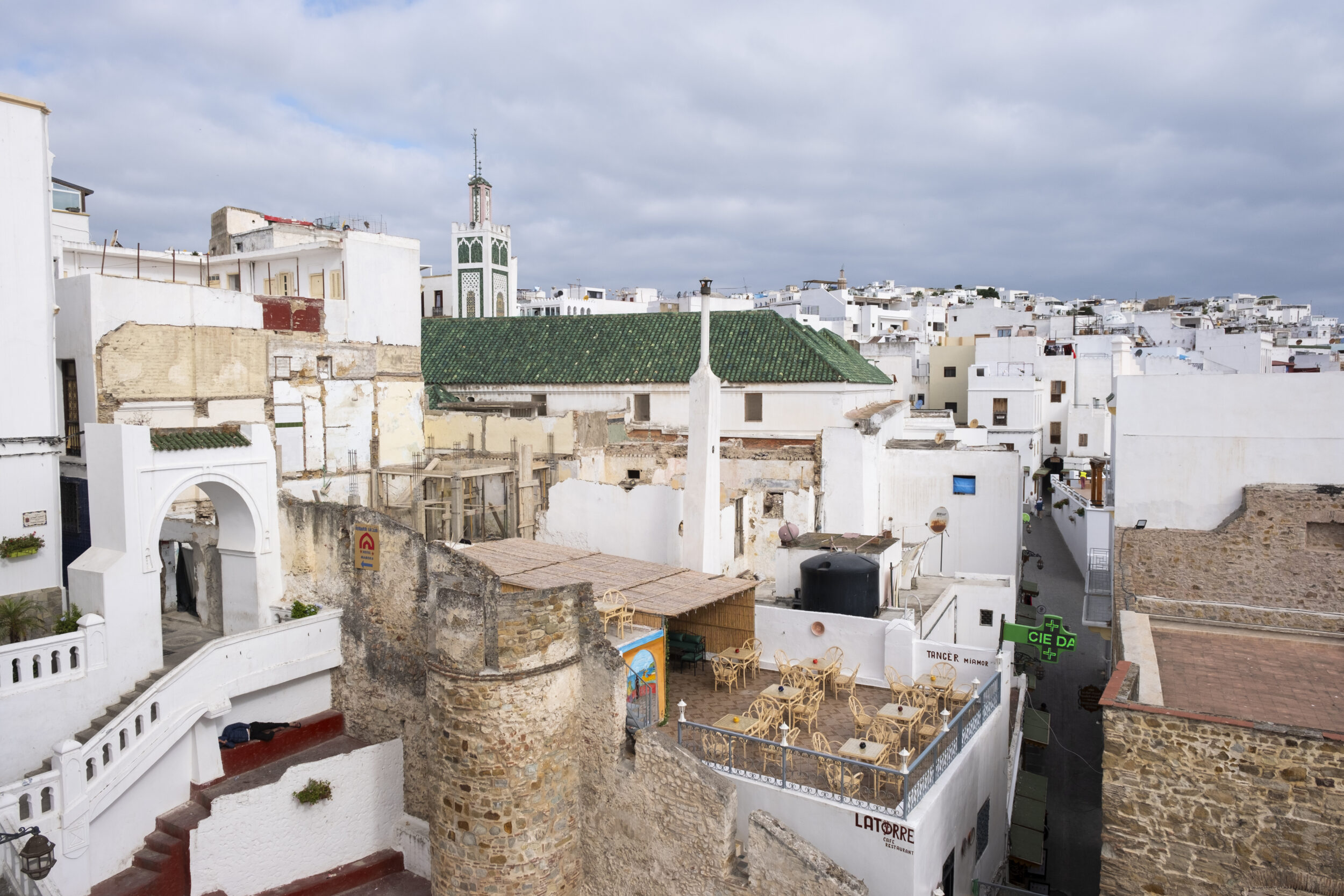
Views over the medina
We enter another layer of the city.
Between 1923 and 1956, Tangier was an International Zone jointly administered by eight European powers and the United States. That extraordinary history left an eclectic architecture and a unique urban identity. The Plaza 9 de Abril —formerly the Gran Zoco— was the centre of that cosmopolitan Tangier. The Mendoubia Gardens, with their enormous century-old dragon tree, were for decades the residence of local pashas.
The Church of St Andrew, built in 1894 on a former Muslim cemetery granted by the Sultan, mixes Gothic style with Andalusian tiles in an architectural syncretism that only exists here. The Spanish Cemetery —almost unknown to tourists— silently holds the tombs of those who built this city. And the Hotel Villa de France, where Henri Matisse painted his famous windows in 1912, adds an artistic dimension to the route.
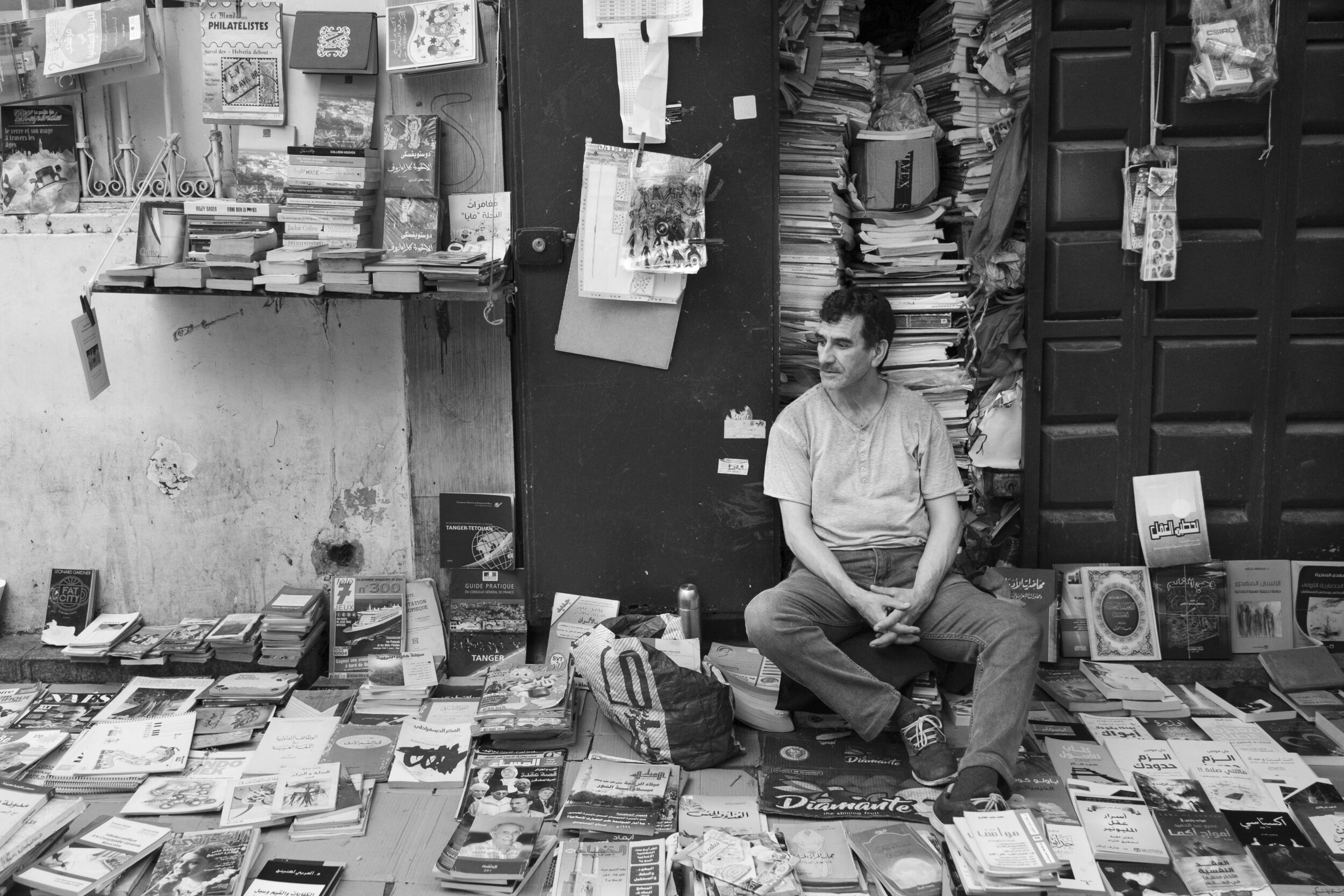
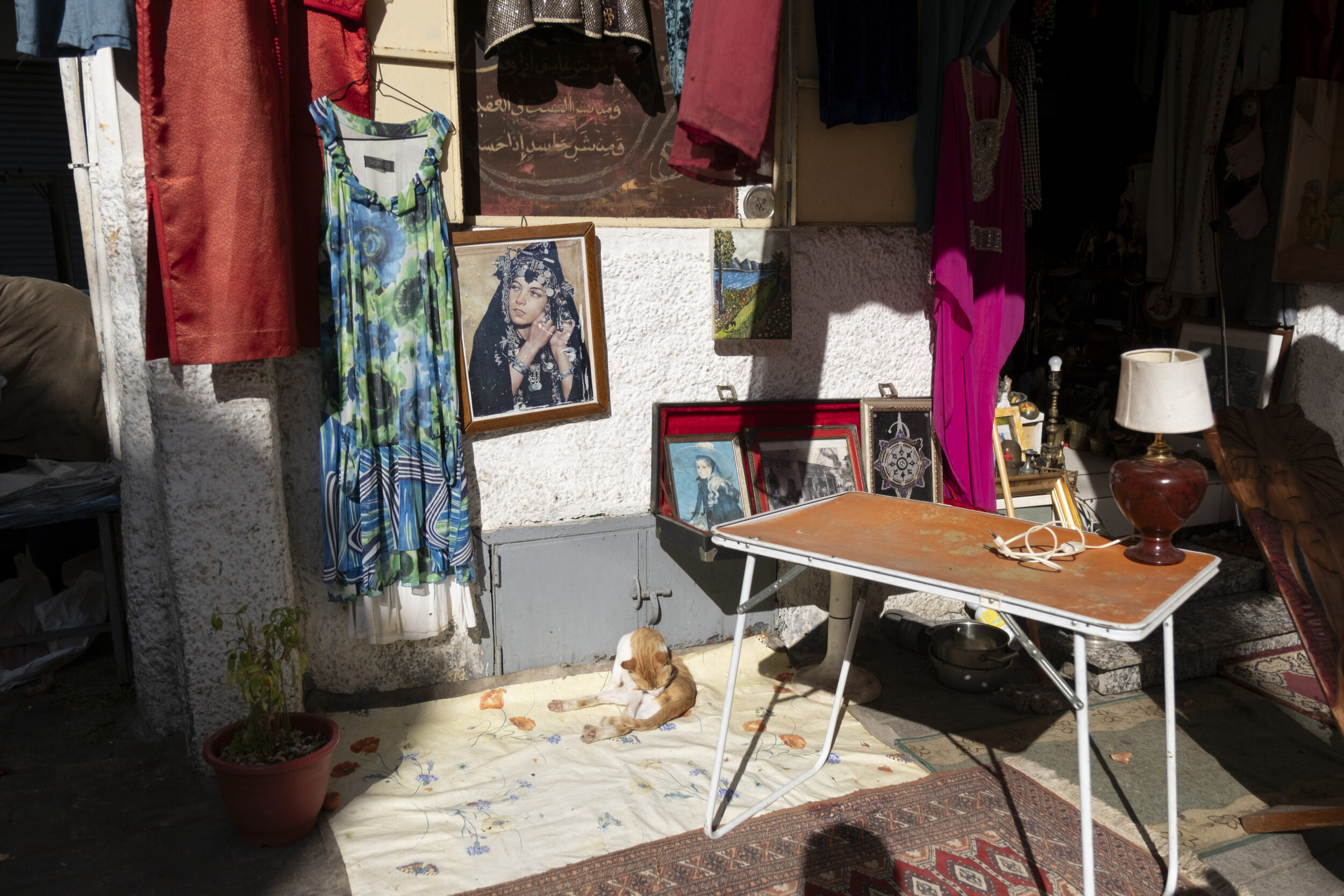
Used book seller in the medina
Here you will work on architecture and context, history inside the image, cleaner and more structured photography.
17:00 — El final del día
The ending depends on the light… and the pace of the day.
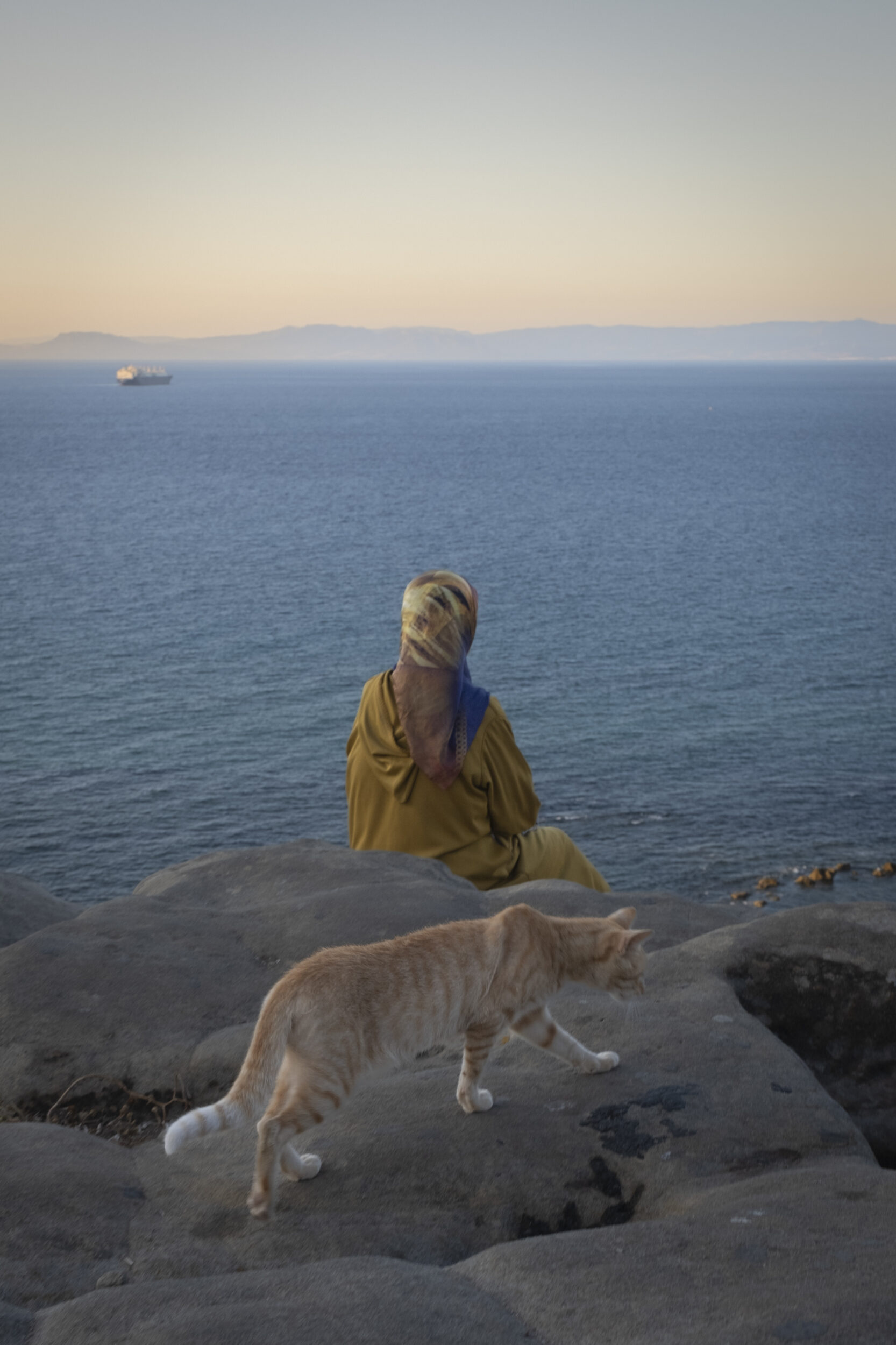
First option: Café Hafa. Founded in 1921 on terraced steps above the Strait, this café was a meeting point for artists, writers and musicians for decades — from the Rolling Stones to Paul Bowles, from William Burroughs to Jack Kerouac. A Moroccan tea with those views is an ending you will not forget.
Second option: head down to Merkala Beach. Here, with luck and the right season, the sun falls on the water with that soft light that turns the Strait into something almost unreal. Silhouettes, reflections, calm.
More than a tour. This is not just about taking photos. It is about learning to see.
Throughout the day you will have continuous support: real-time feedback, framing and exposure adjustments, decisions about when to shoot… and when not to. You will leave with images. But above all, with a different way of understanding photography.
Respect for photographed people
Street and documentary photography involves interacting with people in their everyday environment. On this tour we always promote absolute respect for the people being photographed. No one is obliged to pose or be photographed, and if at any point someone shows discomfort or refuses, the first and only response is to respect their decision without discussion. Photographing ethically is not just good practice — it is the only practice.
Recommended photography level
This photo tour is designed to make the most of every moment of the day, and the best moments don't wait. We recommend participants have a basic knowledge of their camera — exposure, focus and fundamental settings — to be able to react quickly. If any participant needs technical support during the tour, we are happy to help, but this may affect the pace of the itinerary. If you are unsure about your level, please ask us before booking.
Images from the tour